Loading...

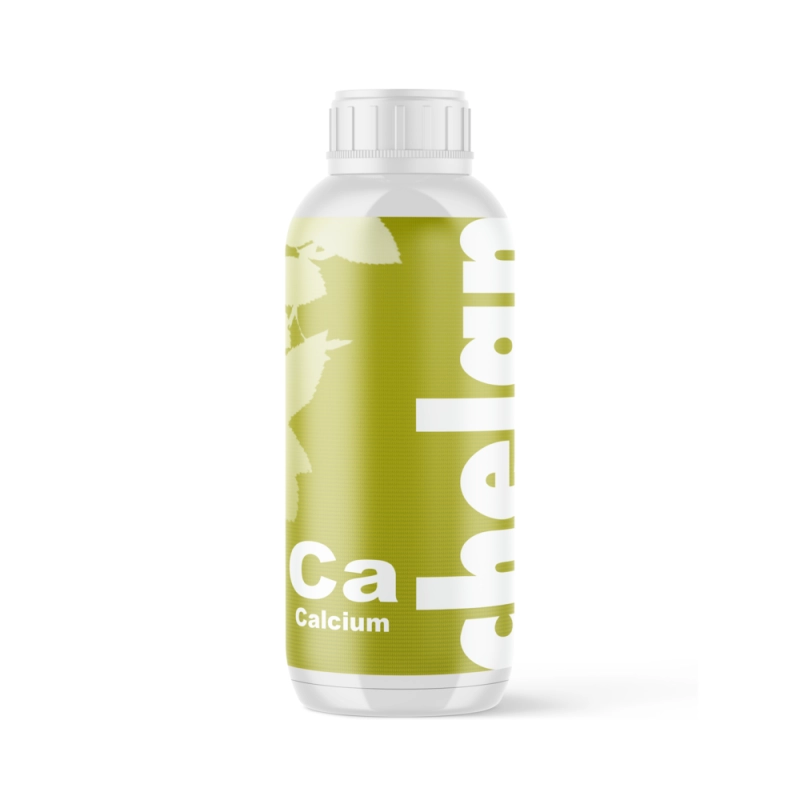

Description
Calcium foliar fertiliser with nitrogen and magnesium
- Suitable for crops with high calcium requirements
- Promotes cell division and proliferation
- Contributes to the development of new roots
- Extends the shelf life of fruit and vegetables after harvesting
- Increases the stability of cell walls
DESCRIPTION
Chelix Ca is particularly recommended for the rapid treatment of calcium in foliar applications. It is an extremely rich, assimilated calcium preparation that also contains nitrogen, magnesium and trace elements in chelating form. Part of the calcium content is in chelated EDTA form, which ensures a long-term effect of the preparation. The properties of Chelix Ca also include its organic plant extract, which is rich in bioactive substances (proteins, amino acids, carbohydrates, etc.) that increase its activity and utilisation by plants.
Chelix Ca is suitable for plants that need a lot of calcium (tomatoes, cucumbers, apples, cherries, etc.). Calcium plays a multiple role in plant growth, as it is essential for cell division and elongation, for the formation and development of new roots and for the formation of compact cell walls. It also prevents anomalies such as "blossom end rot” in tomatoes, peppers and watermelons and "bitter pit” in apples. Its systematic use also extends the shelf life of fruit and vegetables after harvest (peaches, kiwis, apples, strawberries, tomatoes, etc.). The presence of magnesium keeps the Ca/Mg ratio in balance and promotes chlorophyll formation and photosynthesis.
Analysis
%
Nitrogen (N) Nitric
8
Calcium (CaO)
14
Magnesium (MgO)
1,9
Copper* (Cu)
0,01
Iron* (Fe)
0,01
Manganese* (Mn)
0,01
Zinc* (Zn)
0,01
Molybdenum (Mo)
0,001
Organic Matter
1,85
Dosages
General dosage of fertigation: 20 – 30 L / ha
General dosage of foliar applications: 2 – 3 L / 1000 L water
Tomato, pepper, cucumber:
Fertigation
20 – 30 L / ha during the formation of the first inflorescence and repetitions at each cross emergence with the same dosage when symptoms of boron deficiency appear.
Foliar applications
1st application with 2 – 3 L / 1000 L water during the formation of the first inflorescence and repetitions during each flowering with the same dosage if symptoms of boron deficiency occur.
Watermelon, melon:
Fetrigation
20 – 30 L / ha during the formation of the first inflorescence and repetitions during the following flowering with the same dosage if symptoms of calcium deficiency appear.
Foliar applications
1st application with 2 – 3 L / 1000 litres of water during the formation of the first inflorescence and repetitions during each flowering with the same dosage if symptoms of calcium deficiency occur.
Leafy vegetables (cauliflower, cabbage, broccoli):
Fertigation
1st application with 1,5-2 L / ha, at the stage of 4-6 actual leaf formation.
2nd Application with 2 – 3 L / ha, before the ‘heart’ of the vegetable.
Foliar applications
1st application with 1.5 – 2 L / 1000 L water, as soon as the plants have enough foliage to absorb the product.
2nd application with 2 – 3 L / 1000 L water before the ‘heart’ of the vegetables are formed.
Apples – Pears:
Foliage applications 1st application with 2 – 3 L / 1000 L water at the beginning of the new vegetation.
2nd application with 2 – 3 L / 1000 L water before flowering.
3rd application with 3 L / 1000 L water immediately after fruit formation.
In apple orchards where the symptom ‘bitter pit’ occurs annually, spraying with 3 L / 1000 L water every 15 days until harvest is recommended.
Stone fruit (cherries, peaches, apricots)
Foliar applications
1st application with 1 – 2 L / 1000 L immediately after fruit formation and when sufficient foliage has just formed.
2nd application with 2 L / 1000 L water after fruit set.
Greenhouses
The lowest dosage is recommended.
Shop Policies
Operational policy
Test
Delivery Policy
test
Refund Policy
Test