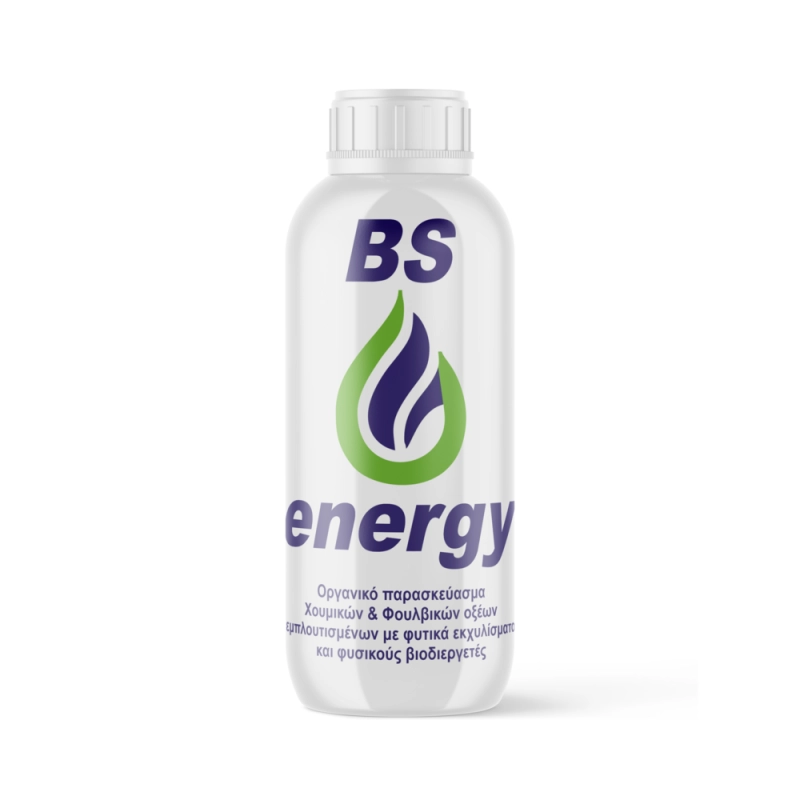
Energy is an organic preparation of humic and fulvic acids obtained from the extraction of leonardite, enriched with extracts of organic plant substances rich in bioactive ingredients (amino acids, peptides, vitamins, oligo- and polysaccharides). The total content of organic ingredients reaches 35%, which makes Energy a powerful biostimulant.
Energy increases the population of beneficial soil micro-organisms and their activity, improving the soil structure and the nitrogen-carbon ratio.
Energy’s ingredients act as natural chelating agents that utilise soil nutrients (macro and trace elements) and improve their uptake and transfer to all plant tissues. In addition, amino acids, peptides, vitamins, oligo- and polysaccharides provide plants with high level of energy, making Energy one of the most effective biostimulants for treating transplant shock.
When Energy is added to herbicide spray solutions, it works synergistically by increasing their effectiveness. Similarly, Energy is combined with fertilisers, fungicides and insecticides, improving their effectiveness and maximising the economic effect.
Dosages
General dosage of fertigation: 10 – 30 lt/ ha.
General dosage of foliage applications: 1 – 3 lt / 1000 lt.
Vegetables (tomato – cucumber – pepper – aubergine)
Fertigation
1st application at 10 lt / ha one week after planting
Repeated applications before each fruiting with 10 – 20 lt / ha
Foliage applications
1 – 2 lt / 1000 lt of water, during the same periods as above.
Leafy vegetables (cauliflower – broccoli – cabbage – lettuce)
Fertigation
1st application with 10 lt / ha one week after planting
2nd application in the rapid growth stage of the foliage with 10 – 20 lt / ha
3rd application in the head formation with 20 lt/ ha
Foliage applications
1 – 2 lt / 1000 lt of water, during the same periods as above.
Watermelon Melon
Fertigation
1st application at 10 lt / ha one week after planting
Repeated applications before each fruiting with 10 – 20 lt / ha
Foliage applications
1 – 2 lt / 1000 lt of water, during the same periods as above.
Strawberries
Fertigation
1st application at 10 lt / ha one week after planting
Repeated applications before each fruiting with 10 – 20 lt / ha
Foliage applications
1 – 2 lt / 1000 lt of water, at the same intervals as above.
Onion, garlic, onion vegetables
Fertigation
1st application with 10 liters / ha one week after planting
Repeated applications before and after bulb formation 10 – 15 lt / ha
Foliage applications
1 – 1.5 lt / 1000 lt of water, during the same periods as above.
Potatoes
Fertigation
1st application 10 – 15 lt / ha one week after planting
2nd application at the stage of rapid leaf development with 15 – 20 lt / ha
3rd application for tube formation with 20 lt / ha
Foliage applications
1 – 2 lt / 1000 lt of water, during the same periods as above.
Plums (apples – pears)
Fertigation
1st application with 10 – 20 lt / ha during leaf formation,
2nd application: After fruit formation with 20 – 30 lt/ ha.
Foliage
1 – 3 lt / 1000 lt of water, during the same periods as above.
Stone fruits (peach – apricot – plum)
Fertigation
1st application: After petal drop at 10 – 20 lt/ ha.
2nd application: During the rapid growth of the fruit with 20 – 30 lt/ ha.
Foliage
1 – 3 lt / 1000 lt of water, during the same periods as above.
Vines
Fertigation
1st application: During the formation of new vegetation with 10 – 15 lt / ha.
2nd application: Before flowering with 15 – 20 lt / ha.
3rd application: In the phase of rapid growth of the grapes with 20 lt / ha.
Foliage
1 – 2 lt / 1000 lt of water, during the same periods as above.
Olives
Fertigation
1st application: During the formation of new vegetation with 20 lt / ha
2nd application: After fruiting with 20 – 30 lt / ha
3rd application: At the core formation stage with 30 lt / ha
Foliage applications
2 – 3 lt / 1000 lt of water, at the same times as above
Kiwi
Fertigation
1st application: During the formation of new vegetation with 20 lt / ha.
2nd application: Before flowering with 20 – 30 lt / ha.
3rd application: During the rapid growth phase with 30 lt / ha.
Foliage
2 – 3 lt / 1000 lt of water, during the same periods as above.
Nuts (walnuts, hazelnuts, peanuts, pecans)
Fertigation
1st application: During the formation of new vegetation with 20 lt / ha.
2nd application: Before flowering with 20 – 30 lt / ha.
3rd application: In the rapid growth phase with 30 lt / ha.
Foliage 2 – 3 lt / 1000 lt of water, in the same periods as above.
Greenhouses
The lowest dosage is recommended.
Nurseries: 5 – 10 lt / ha