DESCRIPTION
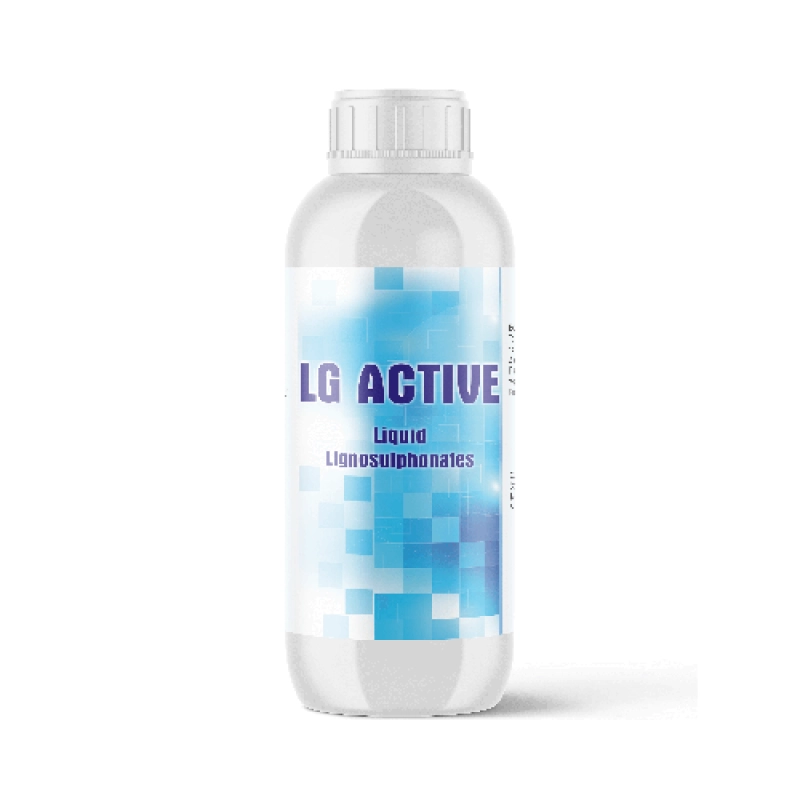
LG active is a liquid "multi-action” micronutrient formulation in combination with lignosulfonates, suitable for all crops. LG active contains copper, zinc and manganese in a balanced ratio to positively influence plant growth and development as well as stress resistance. The "activated” micronutrients in LG active synergistically play multiple roles in plant biochemistry and improve plant health and productivity.
Copper mitigates the negative effects of water stress by improving nitrogen metabolism and increasing the accumulation of soluble phenolic compounds. Copper is also an important micronutrient for lignin synthesis, which is necessary for the durability of cell walls and the prevention of wilting. Manganese is a cofactor for several enzymes involved in redox reactions, such as Mn superoxide dismutase in plants (SOD). All forms of SOD play a key role in the survival of plants under environmental stress. Zinc supply is involved in resistance to many external conditions unfavourable to plants and in maintaining the gene expression in plants required for tolerance to environmental stress. Zinc alleviates abiotic stress such as high light or temperature intensity, drought, heat and salt stress.
The effectiveness of LG active is further enhanced by "stabilising” the micronutrients it contains with lignosulfonic acids. A variety of functional groups in the lignosulfonate molecules, such as aliphatic, aromatic, sulfone, carboxyl and hydroxyl groups, are active biochemical components that further promote plant growth and productivity.
In addition, the complexed elements easily penetrate the epidermal cells of roots and leaves and are directly absorbed by the plants and transported into them.
Dosages
Applications and dosages
General dosage:
Fertigation: 20 – 50L / hectare.
Foliar: 2 – 4L / 1000L of water.
Vegetables (tomato – cucumber – bell pepper – eggplant– watermelon – melon)
Fertigation
1st application before first blossoming with 20 – 50L / hectare, followed by 3 applications at 20 days intervals with the same dosage.
Foliar application
1st application before the first blossoming with 2 – 4L / 1000L of water, followed by 3 applications at intervals of 12-15 days, depending on temperature and humidity conditions.
Leafy vegetables (cauliflower – broccoli – cabbage – lettuce)
Fertigation
1st application 10L / hectare one week after planting.
2nd application at the stage of rapid foliage growth with 10 – 20L / hectare.
3rd application at the formation of the head with 20L / hectare.
Foliar application
2 – 3L / 1000L of water, during the same periods as above.
Potatoes
Fertigation
Application with 20 – 50L / hectare, followed by applications at the same dosage, depending on temperature and humidity conditions.
Foliar application
Application with 2 – 4L / 1000L of water, followed by applications at the same dosage, depending on temperature and humidity conditions.
Strawberries
Fertigation
2 – 3 applications per season in total with 10 – 20L / hectare depending on temperature and humidity conditions.
Foliar application
2 – 3 applications per season in total with 2 – 3L / 1000L of water, during the same periods as above.
Onion, Garlic
Application with 10 – 20L / hectare, followed by applications at the same dosage, depending on temperature and humidity conditions.
Application with 2 – 3L / 1000L of water, followed by applications at the same dosage, depending on temperature and humidity conditions.
Vineyards
Fertigation: 2-4 applications in total, starting with the appearance of new shoots and followed by 2 applications at intervals of 12 days with 10 – 20L / hectare, if climatic conditions favor fungal and bacterial infestation.
Foliar: 2-4 applications in total, starting with the appearance of new shoots and followed at intervals of 12-15 day with 2 – 3L / 1000L of water, if climatic conditions favor fungal and bacterial infestation.
Olives
Fertigation: 3-4 applications in total, 1st application early in the spring, followed by 2 – 3 applications at intervals of 12-15 days with 20 – 50L / hectare depending on temperatures and humidity conditions.
Foliar: 3-4 applications in total, 1st application during new shoots sprouting, followed by 2-3 applications at 12-15 day intervals with 2 – 3L / 1000L of water, depending on temperatures and humidity conditions.
Nuts trees
Fertigation
1st application: During shoot formation with 20 – 30L / hectare.
2nd application: before blooming with 20 – 50L / hectare.
3rd application: at the stage of rapid growth of husks with 20 – 50L / hectare
Foliar application
2 – 3L / 1000L of water, during the same periods as above.