Loading...

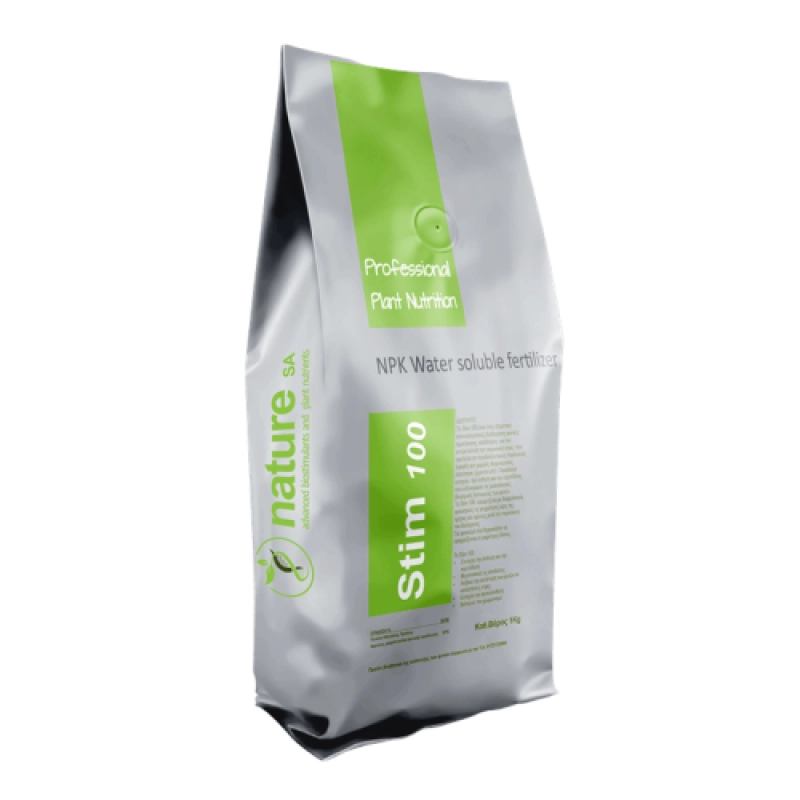
Description
Antistress osmolyte-formulation
- Increases the potential of water uptake during drought and increased salinity
- Activates the biochemical and metabolic functions of plants
- Regulates protein stabilization
- Acts as chelator
DESCRIPTION
STIM 100 is an extremely effective osmolytic formulation that reverses the effects of various types of osmotics. Osmolytics, low molecular weight biomolecules, contribute to the maintenance of plant homeostasis by increasing the potential of water uptake during drought and increased salinity, maintaining cellular health through osmotic regulation and eliminating oxidative stress (ROS).
The unique blend of STIM 100 consists mainly of the fourth class compound of ammonium trimethyl glycine (glycine-vitain), enriched with amino acids with selected osmolytic activity, sugars and polyols. When STIM 100 is applied to the leaves, plants can effectively regulate the water balance and mitigate the effects of drought, salinity, temperature fluctuations and other unfavourable conditions.
In addition to their well-known role as antioxidants, the amino acids contained in STIM 100 also act as biomolecules that activate the biochemical and metabolic functions of plants. They significantly regulate protein stabilisation, protect the photosynthetic process, act as chelators, maintain cell homeostasis and provide the energy required for plant growth, effectively counteracting changing environmental conditions.
Analysis
100% Selected amino acids with osmoprotectant action
Dosages
PROTECTION AGAINST ABIOTIC STRESS
Foliar: 2- 3 Kg / hectare whenever stress environmental conditions prevail (high temperatures, drought)
PROTECTION AGAINST FROST
Foliar: 2 – 3 Kg / hectare
1st application 3-4 days before predicted frost and
2nd application 3-4 days after frost.
If for any reason the 1st application is not done, 2nd application is highly recommended.
Citrus
3 – 4 Kg / ha, single application at beginning of flowering
Orchards, fruit Trees
3 – 4 Kg / ha, single application at mid flowering stage
Table and Wine Grapes
2 – 4 Kg / ha, 1st application at onset of ripening; 2nd 2 weeks later
Table Tomato, peppers, eggplants
2 – 3 Kg / ha, 2-3 applications every 3 weeks, starting at onset of full flowering
Process Tomato
2 – 3 Kg / ha, single application at early to full flowering
Cucumber, water melon, melon
2 – 3 Kg / ha, 2-3 applications every 3 weeks, starting at onset of full flowering
Potato
2 – 3 Kg / ha, single application at tuber initiation
Customer reviews
Share your thoughts with other customers
Be the first one to write a review!